








The Story Behind Copland’s “Fanfare for the Common Man”
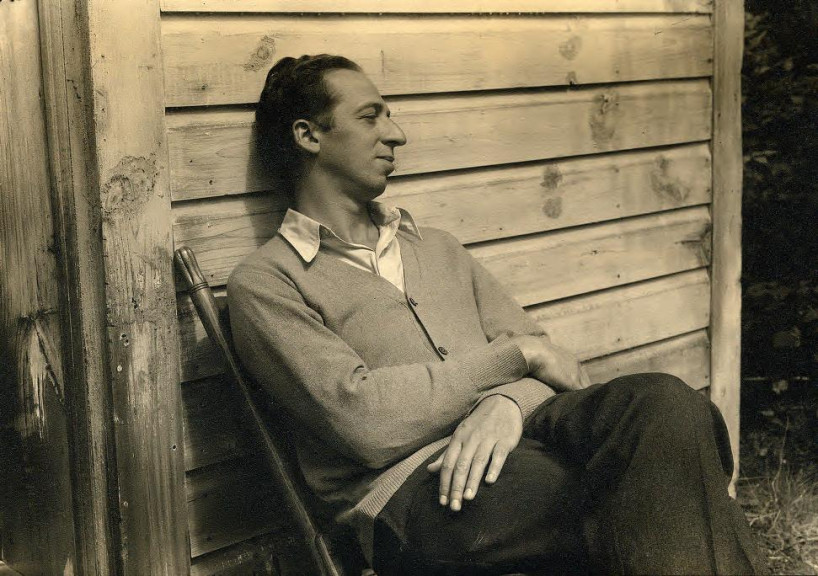
Aaron Copland in undated photo, The Aaron Copland Archives, Library of Congress
As we mark the 250th anniversary of the signing of the Declaration of Independence this year, countless musical organizations are programming concerts dedicated to American music. Many of those musical celebrations of the country’s semiquincentennial will feature music by composer Aaron Copland, especially his most famous work, “Fanfare for the Common Man.” As is often the case with well-known pieces, it’s easy to forget the context in which it was written.
For a city kid born in Brooklyn to Eastern European Jewish immigrant parents, Aaron Copland had a surprising knack for capturing the spirit of rural America in his music. Alongside works like Lincoln Portrait and his trio of “Americana” ballets (Billy the Kid, Rodeo, and Appalachian Spring), Fanfare for the Common Man helped solidify Copland’s reputation as the “Dean of American Composers.” With its brassy, open chords evoking vast landscapes, the fanfare became a template for composers seeking an “American” sound.
Fanfare for the Common Man was the result of a commission by conductor Eugene Goossens of the Cincinnati Symphony Orchestra. In 1942, he commissioned a series of patriotic fanfares from various composers to inspire national unity during World War II. Goossens suggested Copland write an explicitly militaristic fanfare, proposing the title “Fanfare for Soldiers, or for Airmen or Sailors.”
Copland agreed to write a fanfare, but it took longer than he anticipated to compose the three-minute piece. One sticking point was the title. He weighed various options that took a more nuanced view of the war and its devastating impacts. For example, he considered “Fanfare for a Solemn Ceremony” or “Fanfare for the Rebirth of Lidice,” a Czech town destroyed by the Nazis in 1942.
Copland ultimately landed on “Fanfare for the Common Man” to honor everyday Americans working and paying taxes at home to support the war effort abroad. The title was inspired by a speech by then-Vice President Henry A. Wallace, who proclaimed the dawning of the “Century of the Common Man.” His speech, given on May 8, 1942, was a counterargument to Life magazine publisher Henry Luce’s essay titled “The American Century,” in which he called for America to dominate the post-war world as part of its “manifest duty,” spreading its democratic ideals, industries, and culture in other countries.
Instead, Wallace argues, “Everywhere, the common man must learn to build his own industries with his own hands in practical fashion . . . No nation will have the God-given right to exploit other nations. Older nations will have the privilege to help younger nations get started on the path to industrialization, but there must be neither military nor economic imperialism.”
Goossens and the Cincinnati Symphony Orchestra premiered Fanfare for the Common Man on March 12, 1943. The timing around tax time was deliberate to inspire Americans to feel a patriotic duty to pay their income taxes to finance the war. Fanfare for the Common Man became Copland’s best-known work, and he reused it as the thematic basis for the finale of his Symphony No. 3, completed in 1946.
For further listening, check out Joan Tower’s “Fanfare for the Uncommon Woman.” Written in 1986, Tower’s fanfare employs the same brass instrumentation as Copland’s, plus extra percussion. Considered the feminist counterpoint to Copland’s piece, “Fanfare for the Uncommon Woman” is dedicated conductor Marin Alsop and all women “who take risks and who are adventurous.”