








Who are the Illinoisans playing in the 2026 World Cup?
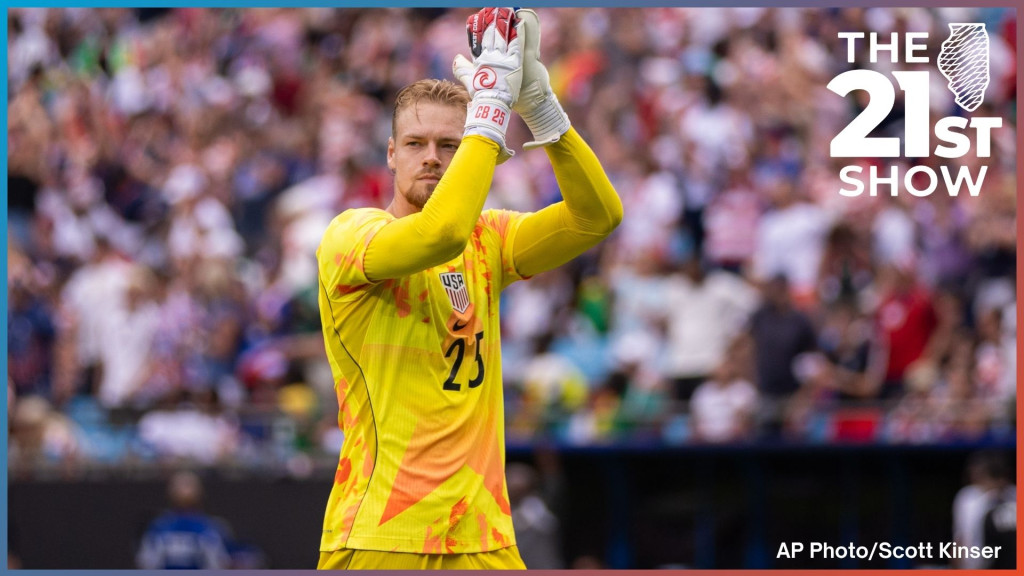
U.S. National Team goalkeeper Chris Brady acknowledges the fans after defeating Senegal in an international friendly soccer match on Sunday, May 31. A native of Naperville, Illinois, Brady is the top keeper for the Chicago Fire. AP Photo/Scott Kinser
// This is a machine generated transcript. Please report any transcription errors to will-help@illinois.edu.

[00:00:00]
Brian Mackey: It's the 21st show. I'm Brian Mackey, and it's almost time for the World Cup, arguably the biggest sporting event on Earth this year. Hosting duties are being shared among the US, Mexico, and Canada. The last time the US was in the World Cup was four years ago. Things did not go as we might have hoped.

[00:00:25]
Speaker 1: We've got some breaking news into the HQ. The United States World Cup run has come to an end with a 3-1 loss to the Netherlands in the round of 16. Hachi Wright scored the US's only goal. That came in the 76th minute. It wasn't enough, though, to get the US into the quarterfinals for the first time since 2002, and now the red, white, and blue are going to have to wait till 2026 when they host the next World Cup alongside Canada and Mexico.

[00:00:50]
Brian Mackey: So here we are. That was reporting from CBS Sports. Hope springs eternal, and regardless of how the US men do, Illinois has fairly strong representation in this year's World Cup. At least four current and former members of the Chicago Fire Football Club have been called up for national team duty. Joining me to talk more about this is Alex Calabrese. He covers soccer for Men in Bl[ue] 97 Media, a news site focused on the Chicago Fire, as well as for MLSoccer.com. Alex, welcome to the 21st show.

[00:01:19]
Alex Calabrese: Brian, happy to be on here and talk some soccer, talk some World Cup.

[00:01:22]
Brian Mackey: All right. And also with us is [Ruy Vaz]. He's a native of São Paulo, Brazil, moved to Europe at age 18 to pursue his soccer dreams. After spending several years playing professionally there — Italy, Portugal — he moved to the US for college. Fast forward to today, he is a Division I head coach leading the men's soccer team at Eastern Illinois University in Charleston. Coach [Vaz], welcome to the show to you as well.

[00:01:22]
[Ruy Vaz]: Thank you for having me. Thank you.

[00:01:22]
Brian Mackey: And listeners, we tape this conversation ahead of time, so we're not taking calls for this part of the show, but you can let us know what you thought by emailing talk@twentyfirstshow.org. All right, Alex, let's start with some of the Illinois players heading for the World Cup. Chris Brady — it's a trifecta for us. He's from Illinois, he plays in Illinois, and he made the national team. So expand on that for people who may not know: Who is Chris Brady?

[00:02:11]
Alex Calabrese: Yeah, so Chris Brady is one of the top up-and-coming goalkeepers in the world. He's 2[2] years old. He's the youngest goalkeeper the US has brought to a World Cup in more than 40 years. So this is pretty big for the Fire, and he is the Fire's No. 1 goalkeeper and someone on the rise who maybe in four years is going to be the starting goalkeeper, but for now he's going to be the US's No. 3 at this World Cup.

[00:02:34]
Brian Mackey: Yeah, as the third string, is he expected to get any serious playing time, or do things have to go kind of really badly for him to get back that [tap] [unclear]?

[00:02:42]
Alex Calabrese: I mean, with all due respect to Chris — because, again, like I said, one of the top goalies on the rise — if he's getting on the field in the World Cup, it means something has gone horribly, horribly wrong for the US, or horribly, horribly right, considering that would mean the US are probably pretty deep in the tournament. But yeah, it's pretty unlikely that he will get on the field, but just being there is a huge experience and it's going to help him four years down the line when he's hoping to be the No. 1.

[00:03:05]
Brian Mackey: What are the strengths of his game? You know, maybe where does he have some room to develop?

[00:03:09]
Alex Calabrese: Yeah, I think what set him apart — pretty much as long as I've been watching him develop since he was a young teenager — is that he is just an elite shot-stopper. He is not necessarily a modern goalkeeper in the sense that he's great with his feet, great playing out of the back. But just his reaction time is incredible. His awareness to come off his line is something that's gotten a lot better over the last couple of years, and in front of goal, he's just someone who can make saves that you didn't think were possible. Whereas, you know, maybe some of the other goalkeepers we've talked about in the last couple of years in the US pool, there's been a big priority on whether they can be part of the defense with the ball at their feet, help start an attack. Brady is not that, and it's an area he needs to improve on, but in terms of his talent stopping shots, he's pretty much as good as it gets.

[00:03:56]
Brian Mackey: All right, and he is originally from Naperville — not the only sort of notable keeper. There's a Cincinnati keeper from Naperville as well.

And Coach Vaz, that brings me to you. I want to ask you about the quality of homegrown talent in the US. There's long been this idea that the US doesn't do as well as other countries at developing soccer talent. You know, it's said our best athletes choose other sports like American football. I wonder what you think of that.

[00:04:21]
Ruy Vaz: There is talent, you know. The thing is, there are always big expectations in the United States for you to develop a world-class player, just because of the state of the country as a world-class country in terms of structure, facilities, and everything, so you would expect to develop some world-class players. But I think the popularity of soccer — it is growing, you know. I remember I arrived in the US 15 years ago, and soccer was already more popular than before, from what I'd heard. And I think it's grown significantly, especially in the MLS academy world, so it takes time to develop. But just like you said, there are many sports here. You know, you go to other countries, it's soccer and maybe a few other sports. Here you have many sports to pick and choose, and you can play two or three at the same time. So I think you can be good at soccer, but in other countries you love soccer. Soccer is part of your world. It's part of your soul. So I think the US, in terms of development, is getting so much better, just seeing the level in the MLS Next and even the [CNL]. So it takes time, it takes patience. I know that the soccer people here want to see already that big jump from being a mid-table country to a top country, but it takes time.

[00:05:54]
Brian Mackey: All right, we need to take another break. We're going to continue our conversation previewing the World Cup from an Illinois perspective. My guests are Alex Calabrese, who covers soccer for Men in [Blue] 97 Media and MLSoccer.com. Also, Ruy Vaz, who is the coach of the Division I men's soccer team at Eastern Illinois University in Charleston. More after a break. This is the 21st show. Stay with us.

It's the 21st show. I'm Brian Mackey. Let's get back to our World Cup preview from an Illinois perspective. We're talking about this with Ruy Vaz, who is a native of São Paulo, Brazil, moved to Europe, played professionally there, and fast forward, he is now the head coach of the Division I men's soccer team at Eastern Illinois University. Also with us, Alex Calabrese, who covers soccer for Men in [Blue] 97 Media, the news site focused on the Chicago Fire. We taped this conversation earlier this week in order to make schedules meet, and because of that, no calls, but let us know who you are cheering for in the World Cup. Talk at [twentyfirstshow.org]. Alex, reading Men in [Blue] '97 and listening to some of your colleagues' podcasts, I get the idea you all have seen a real bump in traffic from South Africa. Why is that?

[00:07:39]
Alex Calabrese: Yeah, so in December, the Fire signed [Kece] Mbokazi, which is South Africa's top rising prospect, and he's one of Africa's top defensive prospects. He's a 21-year-old center back from South Africa who the Fire signed for a lot of money for a player from an African league in December, and he has really hit the ground running. But it's not just what he's done so far in MLS and the developing that he's doing here — it's just the fact that he is so beloved by his fellow South Africans that, yeah, I mean, the Fire are seeing about 50% of their social media followers coming from South Africa right now. 20% of engagement for the Fire — and I'd say for us as well — has been coming from South Africa. So that's been really cool, and obviously he's one of their star players. So even though they're back to the World Cup for the first time in 16 years and they're definitely an underdog to do big things at this World Cup, Mbokazi is one of the young players to watch in this tournament, and I think a lot of eyes — not just from here, not just from South Africa, but from Europe — are going to be on him and how he does in this World Cup.

[00:08:45]
Brian Mackey: Coach Vaz, when Mbokazi joined the Fire, there was speculation about how well he would adapt to playing so far from home. And I was looking over the roster at Eastern — many of your players are very far from home as well, and you yourself traveled halfway around the world once for soccer. How do you help people adapt? How do teams help people adapt?

[00:09:03]
Ruy Vaz: So you already need to have the expectation that it's tough, you know. If you're thinking it's easy — moving to another country and thinking it's easy — just because of the scenario, you're not going to meet your expectations. So you have to understand that there is an acclimation. Some players, they acclimate quickly, others take a little bit longer. But patience, understanding, and clear communication — and it's also important for the club, or in our case for the college, to show that we are here for them. We are going to treat you as one of our own. However, you have got to be strong. You have to go through that. We're going to be with you. But you know, it takes time — whether it's food, the weather, even the game model, the type of game that you're going to play, the conference in our case here. But, you know, if the players feel that they have support and you're there, it gets better.

[00:10:10]
Brian Mackey: Alex, let's turn now to the last Chicago Fire player so far — at least, my kids hope springs eternal for everyone else. And that's Joel Waterman. Who's he? Where's he going?

[00:10:22]
Alex Calabrese: Yeah, so he is a backup center back for the Fire — backup to [Mbokazi], in fact. He's going to be going with Canada, also as a backup. Unlike Brady, he probably will get a couple minutes here and there for Canada, not major minutes, but he's pretty much for the Canadian team been a pretty reliable veteran backup player who can come in and play more than one position if they need him to. But he's never really been a starter for them. He's been with the Fire for a little under a year. They traded for him from Montreal, and he's been there to do that job, to be a third center back — where if they're playing a back three, they can put him in; if they need him, throw him in midfield. Just a pretty reliable backup type, and a good thing to have on a World Cup roster where you're not allowed to make any changes once the tournament starts. So if somebody gets injured, it's good to have that kind of guy who can play four positions. But again, like I said, I wouldn't expect him to get a ton of minutes, because Canada are pretty strong at center back.

[00:11:19]
Brian Mackey: You know, Alex, this is a record for the Fire in terms of the number of active players called up for World Cup teams, and I know that from your coverage, so thank you for that. What does that say about the club?

[00:11:30]
Alex Calabrese: Yeah, I mean, it's something that reflects very well on the club. Getting three players for any MLS team is a very, very rare thing at a single World Cup. The Fire have only had now seven players — including the three from this year — ever get called up to a World Cup in history. So considering half of those are in this World Cup, that's pretty big. I think it reflects well on the club, especially when fans around the world are tuning in and watching, and whether they know the player from somebody else or not, they'll see Chicago Fire pop up on their screen. Or they're opening their Panini stickers and they see Chicago Fire FC USA. It just helps build that awareness globally toward your club, and maybe it helps bring some new people in — "Oh, that [Mbokazi] guy who was great in the World Cup, I can go see him play in Chicago this weekend if I want to." So I think it definitely helps spread the awareness of the club.

[00:12:20]
Ruy Vaz: Yes. I was fortunate to visit Chicago Fire last December and speak with one of their guys there from the coaching staff, and you can understand their success just by the behind the scenes — how organized they are, the methods behind it, and their methodology: how they want to develop players, how they want to be perceived in terms of professionalism, in terms of what they can bring not only to the soccer world and to the major league, but also to the Midwest here. So it doesn't surprise me at all.

[00:12:55]
Brian Mackey: So, Alex, maybe that speaks in part to the fact that [Georg] Berhalter — who's the head coach of the Chicago Fire and director of football as well, so kind of both the business and the player management and the coaching side — he was the national team coach until five minutes ago. So talk about him and what he is trying to do here, and then we can pivot to talking about where the US men's team is now.

[00:13:20]
Alex Calabrese: Yeah, I mean, I think people who have been around the Fire can only say the most positive things about Greg. I know when he's in the national team job, it's a huge pressure cooker — it's really the only job in American soccer that has that much pressure and criticism that comes along with it, and that was tough, obviously. But what he's done in Chicago has been great. He's brought so much structure and direction to an organization that really didn't have that much.

And to build on what we were saying before about how it reflects on the club, I think I would like to emphasize there are three players who are going to this World Cup who were developed by the Fire. There's Chris Brady, who we mentioned; Brian Gutierrez, who's going to be with Mexico; and Esmir [Bajraktarević], who's going to be going with Bosnia, who's from Appleton, Wisconsin, but was with the Fire Academy previously as well. So that reflects really, really well. And I think what Berhalter's done is to try to turn the club into more of a developmental club in the sense that a guy like [Cristopher] [Cucho], who's just turned 18 this week, coming through — I think he'll be with the US at the next World Cup. Bringing in guys like [Viktor Agovic] from Serbia, who, again, has huge potential in the future to be there; [Jay Davila] from Côte d'Ivoire, who could definitely be there in a couple of years in the national team. So that's the kind of thing he's emphasized, and having his experience with the national team and developing players for the national team, he knows what it takes to get to that level. And I think that's helped a lot of those guys.

[00:14:51]
Brian Mackey: So Coach Vaz, how do you consume the World Cup? How do you watch it? Are you watching as a former player, a coach? Are you a fan? How do you think about it every four years?

[00:15:00]
Ruy Vaz: So the World Cup is just like a national month holiday in Brazil. I just remember growing up — classes were canceled when there was a game. Yeah, it's a big deal. But I've — this is going to be my fourth World Cup, I think, watching. [Or third.] I watch it as a big fan of the sport. Obviously, since I've become a coach, I analyze most of the games, but I allow myself to just be a fan when Brazil plays. I don't think about tactics. I don't care. Obviously you're going to see something here and there, but sometimes as a coach you miss watching the game purely as a fan — wanting to see unpredictable stuff and good stuff, especially because that's what Brazil's soccer is, you know — just talent and trying to make things happen. But I am looking forward to watching every single game, as many games as possible — analyze trends, understand some tactical aspects. Although in the World Cup, some of this is a little bit minimized. You have to keep it simple because you're bringing players playing from different teams. But it's always nice to watch the games and see the ideas. But no, as for the Brazilian games, I just become a fan.

[00:16:27]
Brian Mackey: So are you obviously going to be rooting for Brazil? What else do you think about the rest of the field? Do you have an eye on the US at all?

[00:16:36]
Ruy Vaz: My wife is from the US. Both my kids are Americans, so we are going to be watching the United States, obviously. But my wife, she said, "No, I'm going to just support the national team in the women's soccer." So I'm going to be Brazil for the men's soccer and the US for the women's soccer. But I think I'm intrigued to watch the US national team, actually, because I do think there is something there. I was speaking with the head women's soccer coach here at EIU. The back line in the US is a little bit shaky sometimes, but there is a sense of — no, I think there's something good happening. I think I don't know how far the US can go, but once you're playing on home turf, you have all the excitement around — something good can happen. I think I'm actually, you know, half Brazilian, half Portuguese. The other part of my family is Portuguese, so if Brazil doesn't go, I'll probably want Cristiano to have something, you know, because [he's a] big, big icon. So yeah.

[00:17:44]
Brian Mackey: Yeah, maybe his last cup. Ronaldo's last cup. Maybe Messi's last cup.

[00:17:48]
Ruy Vaz: World Cup is tough, man, because I think the best team in the world right now in terms of national teams is France, by far, because of talent. And obviously after that you can talk about Spain — Portugal is really strong as well, England. Maybe Brazil is in the second tier right now with what we have. But the World Cup — you cannot predict anything. The best team can come. Remember in 2002, the two best teams were France and Argentina. They didn't come off the group stage. And Brazil was an even favorite [in 1998], and won. [In] 1998, no one counted on France to win, and France were there and won. So there's so much that comes into play in the World Cup, and it's a different type of competition. You cannot compare it with the Champions League or any national league. It's a different type of competition.

[00:18:48]
Brian Mackey: Yeah, Alex — the US men's team. Let's maybe wrap on this point. They have a history of, you know, group stage defeats, or maybe making it to the round of 16. That happens sometimes when they qualify at all. I don't know if you do predictions, but how do you think things are going this year?

[00:19:03]
Alex Calabrese: Look, I have to feel really good about the US in this World Cup. Three of the last four World Cups, they've gotten to the round of 16, which is about the level that the US are. But in a home World Cup, the host always, always overperforms. Russia got to the quarterfinals and went out on penalties. South Africa beat France when they hosted the World Cup. Korea hosted the World Cup and got all the way to the semifinals. The US on paper is better than all of those teams, so [the US] definitely has the ability to overperform if it's a perfect storm. I think a quarterfinal is what the US should be aiming for. You spend so much money to get an elite head coach — Mauricio Pochettino — in [that role], so I think a quarterfinal has to be what they're aiming for. But if things fall perfectly, you never know what's going to happen.

But look, the US, as we know, is probably about the 15th best team in the world. They're not one of the favorites by any means. But look, you have pretty much elite strikers, elite fullbacks — those are two areas that can make a huge difference if things fall into place and you play the way you want to play. So it all depends. The World Cup has a very, very high variability. Anything can happen, especially in this heat that maybe some of the European teams are not accustomed to. They encountered that in the Brazil World Cup in 2014. So we'll see — hopefully quarterfinals. But like I said, they have some great talent and you're playing at home. Anything can happen at home, so we'll see.

[00:20:33]
Ruy Vaz: You have to be able to control your emotions, and I think the United States maybe can have a good advantage, because American players — they are better at controlling emotions, for instance, than Brazilians, I would say. I think the only time we overperformed in the past five World Cups, it was in 2014. Our team wasn't that good. But then we lost 7-1 to Germany in the semifinals. And that's playing at home. But then you have got to control your emotions. You have to keep them in check. And I do agree with Alex — I think the US can do something good this World Cup. It will be fun. It will be good for soccer here. It would be exciting to bring a new [fan base], because the better a team does, the more the country gets involved. So I think it will be something good for American soccer.

[00:21:32]
Brian Mackey: Coach [Ruy Vaz], Alex Calabrese with Men in [Blue] '97, thanks for being with us on the 21st show.

[00:21:37]
Alex Calabrese: Thank you.

[00:21:38]
Ruy Vaz: Thank you. Appreciate the invite.

[00:21:40]
Brian Mackey: The World Cup begins Thursday, June 11th. The United States' first game against Paraguay in Los Angeles is Friday, June 12th. That's it for us today. The 21st show is a production of Illinois Public Media. I'm Brian Mackey. Thanks for listening.
It’s almost time for the World Cup. This year hosting duties are being shared among the U.S, Mexico and Canada. Illinois has fairly strong representation in this year’s World Cup. At least four current and former members of the Chicago Fire Football Club have been called up for national team duty.
A sports journalist who covers men's soccer as well as a former professional soccer player, who now coaches at the collegiate level discuss some of these local players and their predictions for this year's tournament.
GUESTS
Alex Calabrese
Editor in Chief, Men in Red 97 Media
Correspondent, MLSsoccer.com
Ruy Vaz
Head coach, men’s soccer, Eastern Illinois University