








We interviewed all three candidates for U.S. Senate in Illinois — hear the highlights
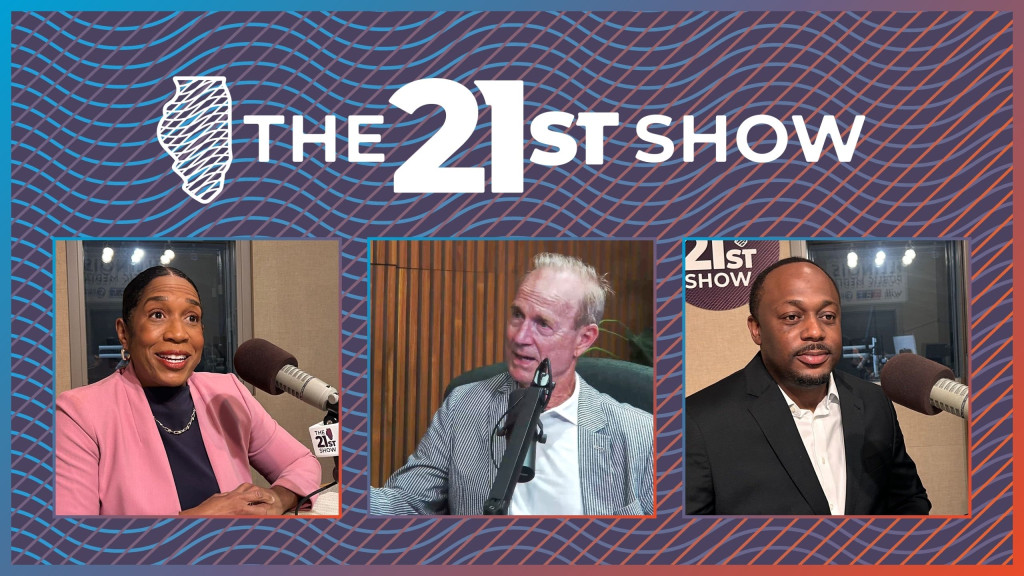
Democratic Lt. Gov. Juliana Stratton, Republican nominee Don Tracy, and American Center Party nominee Whitfield Harrington Jr. during their appearances on "The 21st Show." Illinois Public Media
// This is a machine generated transcript. Please report any transcription errors to will-help@illinois.edu.

[00:00:00]
Brian Mackey: Today on the 21st show, election day is almost here. We have talked with all three candidates in the race to be the next US senator from Illinois, and we'll recap what each of them had to say. That includes Democratic nominee and current lieutenant governor [Giulliana] Stratton, former Republican Party chairman Don Tracy, and Pastor Whitfield Harrington Jr., who's running with the American Center Party. I'm Brian Mackey. That's all coming up today on the 21st show, which is a production of Illinois Public Media, airing on WILL in Urbana, WUIS in Springfield, WNIJ in Rockford DeKalb, WVIK in the Quad Cities, WSIU in Carbondale, and Tri-States Public Radio in Macomb, Galesburg, and Keokuk.

But first, news.

From Illinois Public Media, this is the 21st show. I'm Brian Mackey. Today we are continuing our recaps of races at the top of the midterm ballot. Election day is next Tuesday, November 3rd, but early voting is already underway across the state. Today, we focus on three people running for US Senate in the race to succeed Dick Durbin. The candidates are Democratic lieutenant governor [Giulliana] Stratton, former state Republican Party chairman Don Tracy, and a third-party candidate, Whitfield Harrington Jr., who represents the American Center Party.

What you're hearing today are excerpts from longer interviews, and if you want to listen to our full conversations, you can find them at our website, twentyfirstshow.org.

All right, on with the show. Up first, the Democratic nominee, [Juliana] Stratton. Raised on the south side of Chicago, she worked as a lawyer, mediator, and administrative law judge. In 2016, she ran for state representative. During her only term as a legislator, a wealthy political outsider named JB Pritzker selected her as his running mate, and she has served as lieutenant governor since 2019. I spoke with her just a few weeks ago in mid-October, and we began our conversation with the war in Iran.

[00:02:26]
[Giulliana] Stratton: Well, remember we have a president who dragged us into this war, uh, told us no plan for what he wanted to accomplish, did not seek authorization. It's an illegal war. It's a war of choice and, uh, we are not — more clear than we were eight months ago about what the plan is and when it's going to end. And the thing that I think I'm hearing from voters every single day is how they are being impacted by it, whether it's gas prices, just everything that is so expensive. So, uh, it's not going well. Uh, this is a war that really was, you know, started by this — you know, we were dragged into by this president to really stroke his ego, and, um, I want to get to Washington, D.C., to put a stop to it.

[00:03:20]
Brian Mackey: People who maybe don't like the way this — you know, the president has prosecuted this phase of our decades-long conflict with Iran will still say, you know, some of this was necessary. Maybe this was the time. Some had to be done, right, to prevent a nuclear Iran. How do you think about that?

[00:03:37]
[Giulliana] Stratton: Well, I certainly don't want to see a nuclear Iran, but that's not the progress that we're making. I mean, we're seeing Donald Trump and, quite frankly, Prime Minister Netanyahu working together and putting us in a position that is not getting any progress. We're not making any progress. Eight months in, when he told us it was going to happen very quickly. In fact, he told us Iran's nuclear capabilities were obliterated last year. And yet now here we are and we're not making any progress. So I don't see them having a real path forward, and I don't see them doing — certainly the president doing this in the best interest of the American people. In fact, in so many ways he continues to put us at risk.

[00:04:22]
Brian Mackey: You know, the Congress has spent decades ceding its war powers authority to the executive branch under both Democrats and Republicans. Do you think a rebalancing is necessary there in terms of how much authority the president has to wage war regardless of who the president is?

[00:04:39]
[Giulliana] Stratton: Well, what I think is that what we're looking at right now with this particular president — and that's what I'm focused on — is we have a president who constantly overlooks the fact that we have three, or are supposed to have three, coequal independent branches of government. That's not how he operates. He's making decisions that are best for himself. He's making decisions that make him wealthier, makes his friends wealthier, and the American people bear the cost. I mean, when we even talk about this particular war, what's happening with gas prices? What's happening as we think about how tariffs have been implemented? American people are talking about how everything is too expensive right now, and, uh, we need a Congress that's going to stand up to this president. Uh, we need a president that's going to follow the Constitution, and we need the three coequal branches of government to operate as intended. And that's not what we're seeing right now. So that's what I want to fight for.

[00:05:43]
Brian Mackey: Staying with the theme of the Iran war and given Israel's involvement, I asked Stratton how she thinks about reevaluating our longstanding relationship with Israel.

[00:05:54]
[Giulliana] Stratton: Well, I believe Israel is an important ally, and I believe that Israel has a right to safety and security. I've always said that. But I don't believe that Netanyahu shares that goal of seeing what I want to see — Trump or Netanyahu — which is long-term peace in the region and a two-state solution. That's what I want to see, and I don't believe that we have the leadership right now that wants to see the same thing, nor is working towards that. They've dragged us into this illegal war and want to see it continue for their own interest, and I believe that Netanyahu should be removed from power.

[00:06:31]
Brian Mackey: In our conversation with Stratton, we included some questions from listeners, like this one from [Adrianne] in Carbondale, who said, I would like to hear how she and other senators will take concrete steps to take back the powers of Congress.

[00:06:46]
[Giulliana] Stratton: I think number one, I want to see Democrats flip the House and flip the Senate. That's the first step. We have a president who in my estimation is a wannabe dictator, a president who's stomping on the Constitution, a president who has an authoritarian agenda that we see playing out every single day, whether it is restricting access to the press, whether it's trying to suppress voting rights, uh, all of the other things — ICE agents roaming the streets and snatching people off the streets — um, these are all just a part of the authoritarian playbook. So number one, we have to get in office, because the Democrats — because we don't have Republicans who have the courage to stand up to this president, and they're rubber-stamping his agenda. So we need to get in there to be a block, a wall of resistance, to really stop what is happening, stop the bleeding, I like to say.

Number two, we have to do whatever we can to try to, uh, just sort of reverse, or I should say restore, uh, the cuts that have been made that are hurting so many Americans and certainly Illinoisans, whether that's stripping millions of Americans of healthcare, ripping food out of the mouths of hungry children by stripping away, you know, SNAP benefits. All of these things that we've seen from, for example, HR 1, or the one big ugly bill, as I like to call it — we need to really start that effort.

But we also have to be a real check on this president. And that's when we talk about the three coequal branches of government, that's what's intended to be a check on the president. And I would take on that role. I won't confirm any of this president's nominees, whether it's to a cabinet position, to the Supreme Court — uh, this president is not fit to be able to make such, um, you know, nominations, and I won't support it. Uh, I will look at — you know, I will use my oversight authority to be able to call into question, recognizing that the American people deserve to know exactly what is happening in their government.

So this is a time that requires the energy and the courage to stand up to this president. And, uh, that's the kind of check I intend to be. So first, let's get in there. Uh, but no matter what happens November 3rd, uh, more broadly for the party, I'm going to be someone who gets to Washington to be a check on this president, and I take that very seriously.

[00:09:09]
Brian Mackey: A little later, the conversation — we talked about immigration enforcement and Stratton's ongoing support for abolishing ICE.

[00:09:17]
[Giulliana] Stratton: I am one of those individuals that does not believe that this agency can be reformed or regain the trust of the American people. And I just, again, have to reiterate that that is the authoritarian playbook — to cause the American people to, use this example in America, to cause us to not have trust in our systems. And that's why we're seeing attacks on our electoral system. It's why we're seeing attacks on our education system. It's why we're seeing attacks on the media, and it's why we're seeing, uh, this effort to try to convince people that their neighbors are out to harm them. It is a way to not just sow seeds of distrust, but it's a way of, uh, sowing seeds of division so that there's an us-versus-them mentality.

And so this system — after you've watched people be shot and killed, after you've watched, uh, this sort of mass recruitment of people with God only knows what kind of training, when you see people driving their trucks through crowds of protesters and, uh, snatching children and grabbing people that include American citizens — how do you go back to saying, OK, and let's go back to quote-unquote normal now? It doesn't happen, and the American people know that.

[00:10:45]
Brian Mackey: This was not our first conversation with Stratton. We had talked with her and many of the other candidates running in the crowded Democratic primary last year, and at that time she was in favor of eliminating the filibuster. I asked her whether that was still her position.

[00:11:00]
[Giulliana] Stratton: Yes, I still believe that when Democrats take back the Senate — and hopefully that is November 3rd, 2026 — that we should end — work to end the filibuster when we get into office. Um, this is — look, the filibuster has been used to block so much progress. And when I think about the things that we could get done, what Democrats could get done that Republicans have blocked because of the filibuster — we could pass the John Lewis Voting Rights Act. We could restore the protections of Roe v. Wade and, uh, give women the right to decide what's best for their own bodies and their own futures. You know, we could, um, we could pass some common-sense gun legislation. We can do all of that. Uh, we can come back to a place where we can say, let's, you know, roll back all these cuts to Medicaid and to, uh, SNAP benefits that have been made through the one big ugly bill. We can do those kinds of things and deliver for people and remind, um, Illinoisans and Americans all across this country that we are the party that's fighting for them, and we are here to get things done.

Now, look, Donald Trump will still be in office and Donald Trump will still try to veto the things that we get passed, but we have to stop what we see as the Trump administration and congressional Republicans that are hell-bent on blocking that progress.

[00:12:24]
Brian Mackey: We also talked about the Supreme Court and how she feels about some of the proposals to alter it, from, you know, expanding the number of justices to stripping some of the court's jurisdiction.

[00:12:35]
[Giulliana] Stratton: I spoke earlier about the fact that we're supposed to have three coequal independent branches of government, and I don't believe we have that right now. We have a Supreme Court that also is working to rubber-stamp this president's authoritarian agenda. And, uh, I think that everything needs to be on the table to try to figure out what we do differently. You know, I always start by saying we need to enforce strong ethics rules and requirements, uh, and that anybody who does not follow those rules, those ethics rules, uh, should be removed from the court. But I also know that we have an administration — and to me, many members of the Supreme Court justices — where ethics may not be a motivating factor. Unfortunately, it should be for anybody who is serving in that capacity, but it's just not, and I'm telling the truth. And so, uh, whether it's expanding the court, whether it is term limits, I think we should consider it all — at least look at what should happen, because we have to do something about the fact that there are these lifetime appointments that have really just abandoned what the responsibility is.

The other thing that I always say is that I will not — and I might have said this earlier — I will not vote to confirm any nominees to the Supreme Court made by this president. Period.

[00:14:00]
Brian Mackey: Any — any, toward the end of our time together, I asked Lieutenant Governor Stratton whether there should be campaign finance changes. She said, we have to do something about money in politics.

[00:14:13]
[Giulliana] Stratton: There is a deep, deep frustration that voters have right now. And, you know, I'll take healthcare as a good example. Um, you know that I'm going to fight for Medicare for All. I believe that everyone who needs a doctor should be able to see a doctor. And I think it's a false choice for people to have to say, do I pay my rent this month or do I go to the doctor? That is not a choice that I believe Americans should be making. And it came from the fact that, um, I was the caregiver for my mother, who had Alzheimer's, at a time when, uh, there were efforts by our previous governor and my state rep at the time to strip healthcare from seniors here in Illinois. And so healthcare is always something that I want to fight for.

So to go back to your question, there are too many forces in this industry where, uh, it's not just about — and they have a lot of influence in Washington — it's not just about giving access to care. But there's all of the other factors that they will push for that might be contrary to making sure that we can get to a universal healthcare system.

So it's happening. It's something that people are, um, thinking about in very real ways. They don't talk about campaign finance reform all the time. I mean, sometimes when you say get big money out of politics, people hear that and they say, yes, I want that. But what they know is that it seems like the rich keep getting richer and they keep falling farther behind. To the extent — by the way, Brian — that, um, people don't even know what it means to be in the middle class. Like, you ask people, are you in the middle class? And they're like, I'm not sure, because that sounds like a comfortable life to me. It sounds like I can pay my bills, save a little for retirement, you know, spend it on vacation or some extra things. But I don't always feel like that. I feel like more and more I'm living paycheck to paycheck.

So we have to do something about the corporate influence. I say this is the most corrupt president that we've ever seen. And the issue of big money in politics with the most corrupt president — that combination, especially, has shown the real damage that can be done where government is no longer working in the best interest of the American people. It's working in the interest of the highest bidder, and that is not how we're going to save our democracy, and it's not how government should work, and it's not what's in the best interest of the people that I hope to serve in Illinois.

[00:16:51]
Brian Mackey: Lieutenant Governor [Giulliana] Stratton, the Democratic nominee to be the next US senator from Illinois.

Up next, Republican nominee Don Tracy. But first, a quick reminder — you can join me for election updates after the polls close Tuesday night. We'll have news on the radio and the results live stream on YouTube. More information about all that at our website, twentyfirstshow.org.

This is the 21st show. Stay with us.

It's the 21st show. I'm Brian Mackey. We're hearing today from all three candidates in the race for US senator from Illinois. We spoke with each of them over the past few months, and today we're bringing you recaps of those conversations. Again, early voting is underway across the state, has been for more than a month, and election day is next week, Tuesday, November 3rd. You can hear our full interviews with each of the candidates, as well as these recaps, at our website, twentyfirstshow.org.

All right, back to the interviews. We come now to the Republican Party and nominee, Don Tracy. He is the former chairman of the Illinois Republican Party. Tracy was born in Urbana and raised in Mount Sterling. He became an attorney, and in addition to that work, previously ran in the Republican primary for lieutenant governor in 2010. And he also served as head of the state's gaming board under Governor Bruce Rauner. I spoke with Tracy in late July. Early in our conversation, I asked him what he would do as a US senator about the cost of living.

[00:18:38]
Don Tracy: One of the reasons why cost of living is such an issue now and such a problem for so many people out there that really are struggling, uh, to, um, stretch their paychecks, uh, to buy groceries and, and fuel, uh, is because of, um, Biden inflation. You know, uh, that COVID required a lot of extra spending by the federal government, and we did that twice under the Trump administration. And then President Biden was elected, and then he did like a third, a third and fourth round, which I believe are unnecessary. And it's that third round — what was misnamed the Inflation Reduction Act — that caused what I think everybody agrees was the highest inflation in 40 years since the Carter years, the Jimmy Carter years, in excess of 20% — and that 20% is still there, you know, it hasn't, so we're still dealing with that on top of, you know, regular inflation.

So, you know, reducing — being more fiscally responsible about government spending is part of it, because that will help reduce interest rates. Um, you know, people don't talk about shoplifting — you know, law enforcement can help reduce the cost of living. You know, a lot of the, um, big-city prosecutors stopped prosecuting shoplifting unless it was above a very high level, and that has produced, I think, a national shoplifting epidemic. Even in my hometown of Springfield, go up to any store clerk at a CVS or Walgreens or a Kohl's or Target and ask them if people walk out with stuff, and they'll say, all the time. And they'll say, what can you do about it? Nothing. We can't do anything. We just let them go. Well, that adds to the cost of everything that can be carried out of a store.

[00:20:29]
Brian Mackey: Is there a federal policy you would recommend to address that issue at the, you know, CVS and Walgreens in Springfield?

[00:20:35]
Don Tracy: Yes, through the power — the power of the purse — which I think would address all of, um, you know, say public safety issues. That's being done in Chicago now, as I understand it, that some of the funding for mass transit has been held up, or maybe paused, was paused, until the CTA added real police to patrolling the trains, which have become very dangerous, so that people — a lot of people are afraid to ride the trains up there. Though it's getting better because they had unarmed security forces on the trains patrolling the trains, but now they have real police there, and I think it was because of federal policy that did that.

And I've ridden the trains over the years many, many times there. But I don't know that I would do it at night by myself, and I, it just seems like there's more traffic than ever around Chicago, and I spend a lot of time there now, and I suspect it has something to do with fewer people riding the trains. And I know whenever I've, you know, seen some numbers on it, I know their train revenues, ride revenues, are way down and ridership's way down.

And so that sort of thing. So on the shoplifting thing, you could — to the extent that the federal government funds, uh, say local prosecution offices — you could add some [stras] to that, say, you know, we're only going to fund you if you prosecute, you know, the real crimes.

[00:21:57]
Brian Mackey: You mentioned this idea of Biden inflation. It's been a year and a half now. I wonder, at what point does — you know, do continued economic problems become Trumpflation or federal Republican inflation?

[00:22:09]
Don Tracy: Depends on which side of the aisle you're talking to. I mean, according to the other side, uh, it's, you know, it's happened on day one, right when he was sworn in. But —

[00:22:17]
Brian Mackey: Well, I did a little research before this conversation. I paid — there's a gas station just a few blocks away from where we're talking in the studio now. $4.40 a gallon as we are taping this on a Wednesday afternoon. I paid $2.50 a gallon in central Illinois back in January. So there's a big price increase, right?

[00:22:37]
Don Tracy: And that's due to the Iranian war. But right after the Biden administration finished its term, I think at that time it was in the $4 range, and it came down quite a bit to $2.50 as you say. And now it's temporarily spiked, and that's hurting the cost of living. There's no doubt about that.

[00:22:57]
Brian Mackey: Does the administration bear responsibility for doing something to address that?

[00:23:03]
Don Tracy: Yes, but it is, you know, it's the price we have to pay, you know, for national security. And I know it's, it's a sacrifice for a lot of people, but you know, in World War II we had, you know, rationing. We had ration books, we had victory gardens. You couldn't get a new car because all the plants were building tanks. There were huge sacrifices on the home front at that time. And in this case, in the case of this particular military conflict, the main sacrifice is in the — what I hope is a temporary spike in gas prices. We've already noticed that when, you know, there's a ceasefire that lasts for a while, the prices go down pretty fast, and once there's a permanent resolution, I do expect the gas prices to go down quite a bit.

[00:23:53]
Brian Mackey: Don Tracy, the Republican nominee for Senate. And I went on to talk more about the Iran war and America pulling back from NATO under the second Trump administration.

[00:24:03]
Don Tracy: The president campaigned on no endless wars, and so I expect him to keep his word on that — that this is not going to be an endless war. Like, I don't know how long we were in Afghanistan, 12 years or so. Um, Vietnam was 10 to 15 years. So right now there are no signs of this being an endless war. Um, and I, I know the current administration — I don't believe — wants to be the world's policeman. I don't think that's what this is about. Uh, this was a threat to America — uh, a nuclear Iran with ICBM capability, and they seemed like — what I heard was they were on the verge of that, with the ability to deliver a nuclear bomb to New York City as a threat to America. So I don't believe that this military conflict is about being the world's policeman, but we do have a significant interest to defend in the United States and throughout the world, and allies are very important.

NATO is a very important ally. But — what they say in World War II — the only worse thing than fighting with allies is fighting without them. But NATO has not been doing their share. And the president has actually, over the course of I guess two terms, gotten NATO to start participating in their own defense. I mean, World War II ended in 1945 and yet we're still over there, you know, defending them and spending a lot of money to defend them. They need — it's about time they defend themselves more. But we need to maintain NATO and we need to maintain Europe as an ally.

[00:25:47]
Brian Mackey: I also asked Tracy about the idea that more Americans want to reassess our country's support for Israel and what he thinks of that.

[00:25:56]
Don Tracy: A lot of it, I think, is pretty ugly — the anti-Semitic aspect of it. I thought there are two things that I thought we had basically conquered in my lifetime. And one was, uh, socialism — I thought that with the falling of the Berlin Wall, once and for all, the world was going to start getting rid of socialism — and anti-Semitism. Uh, but they're both coming back, um, on the — you know, through the democratic socialist [wing], and I don't quite understand that.

Israel is an important ally, our most important ally in the Mideast. They're a true democracy. Uh, they're a successful democracy, and they've been an ally for a long time. And the conflict in Gaza and Lebanon are horrible. War is horrible. It's absolutely horrible. But Israel didn't start it. Hamas started it on October 7th. And so I do believe in supporting Israel and its defense. And, and a lot of the people on the Palestinian side — they like to recite "from the river to the sea," basically they want to destroy Israel. It's like Iran was "death to America," and their position is "death to Israel." And so we, we have to support Israel.

[00:27:22]
Brian Mackey: I think people on the right, though — you know, younger people as well —

[00:27:25]
Don Tracy: There are some dipping —

[00:27:26]
Brian Mackey: — into this area.

[00:27:27]
Don Tracy: Right. And I, I can't — you know, the Republican Party, the conservative party, whatever you want to call it, it's a big-tent party. We have a lot of different views on a lot of different subjects. But I think the majority of, uh, Republicans support, um, Israel.

[00:27:44]
Brian Mackey: All right, we're listening to excerpts from my interview over the summer with Don Tracy, who is the Republican nominee for US senator from Illinois. Among the many things we talked about were several deaths linked to the Trump administration's immigration enforcement campaigns.

[00:28:01]
Don Tracy: In, I think, most of those cases, the people that were injured or shot were either, um, actively obstructing federal law enforcement, or they were allegedly, um, directing their vehicle towards a law enforcement officer, and/or they were, um, disobeying a lawful officer's command. And then in those — just like in any kind of police shooting — it's the same issue: was the shooting justified? And in each of those cases I'm sure that that is the issue.

[00:28:44]
Brian Mackey: And I think the federal government has done a good job of sort of investigating whether those shootings were justified, working with local law enforcement as they have in the past to, you know, investigate these sorts of things.

[00:28:56]
Don Tracy: You know, I, I don't know, because I haven't, um, I haven't followed the investigations. Um, but, uh, like I said, the question is, uh, was reasonable force used in the situation? And here, um, you have — you had organized, you have organized groups that are out there doxing law enforcement officers and stalking them and following them and getting in their way and trying to obstruct law enforcement because they disagree with the law. Uh, because they are, I think, open-borders people. Um, and there are a lot of people — my, my, uh, my opponent is for open borders as well. Uh, and, and, and that's fine, it's a free country. You can have that belief. Um, but, you know, I believe that laws should be enforced, including, uh, including immigration laws. They should be reasonably enforced. I want to add that. That's important, because all law enforcement should be reasonable. I think that's the, uh, sort of the ultimate judgment.

[00:30:07]
Brian Mackey: For the record, I put Tracy's assertion that Stratton is for open borders to Stratton herself. She said no. We went on to talk about the US Supreme Court's decision to maintain birthright citizenship for children of parents who are not citizens or don't even live in the US. I asked Tracy, was that the right call?

[00:30:29]
Don Tracy: I'm a fan of legal immigration. We're a nation of immigrants and we need probably more legal immigration, not less. And we do now, as I understand it, naturalize more citizens through immigration policy than I think any other country in the world already. But birthright — birthright citizenship is just such a weird concept, you know. And as a result, there are companies, I understand, in China and elsewhere that are in the business of what's called birthright tourism, where people will pay them to go to the United States just to have a baby and have a baby that's a US citizen, and then they return to their place, so they have a child that can be, I guess, a dual citizen and qualify for certain benefits even though they're away. Uh, so, there — there are very few, if any, major countries in the world besides the US that have that. There are countries in, um, in Europe that had it and then they got rid of it because it was such a strange thing. I don't think Mexico allows birthright citizenship. No, I, I — the Supreme Court — I respect the Supreme Court, and, um, I thought it was kind of a close issue, but —

[00:31:50]
Brian Mackey: Would you remove it? Would you support an amendment to change the 14th —

[00:31:54]
Don Tracy: Constitutional amendment? Yes, I would. I think it's just — what public policy does that serve? We need, you know, good immigration policy. We need a good process, a due-process procedure for citizens. It shouldn't be that somebody pays a Chinese businessman, you know, $50,000 to have a child who's an American citizen just by making a trip to the United States. I think that's wrong policy. So yes, I would support a change in the law, a legal, a lawful change in the law.

[00:32:23]
Brian Mackey: Toward the end of my conversation with Tracy, I asked him a question that came from Jane in Pawnee, who said, on what issues have you differed from President Trump? Tracy eventually said he wants to keep the filibuster.

[00:32:38]
Don Tracy: That is one issue where, uh, my opponent, uh, Lieutenant Governor Stratton, and President Trump are in lockstep. They both want to abolish the filibuster, and I disagree completely with that. I think the filibuster is what — requires bipartisanship on really big stuff. And I think it also provides stability to our government. Otherwise we'll be more like a banana republic, and every time we have a slight majority — maybe one vote in one house and one vote in the Senate — complete 180-degree turns in policy.

So I think the filibuster is a very important part of the success of this American democracy. And so I do disagree. I understand the president's view on this — that he thinks, well, the Democrats are going to abolish it as soon as they get back in the White House, so we better do it first. And I understand that argument, and that is the best argument for abolishing the filibuster. But I have confidence that there are enough reasonable Democrats in the US Senate that even when they get back in control, which is probably inevitable at some point, there will be some new [Manchins] or [Sinemas] or [Fettermans] who will not go along with abolishing such an important, good-governance aspect of American governance.

[00:34:07]
Brian Mackey: Don Tracy is former chairman of the Illinois Republican Party and that party's nominee for the US Senate election in Illinois this year.

We need to take another break. When we come back, we'll hear from the only third-party candidate on the ballot for Senate, Whitfield Harrington Jr., running under the American Center Party label.

Before we go to break, let me mention again our election night updates. Next Tuesday — it's during NPR's national coverage — we'll start at 7:15 and go every hour, quarter after the hour, on most of the stations that carry our program. We're also trying something new this year. If you want live analysis as the numbers come in, you can join us on the Illinois Public Media YouTube page for a live stream starting at 8 p.m.

This is the 21st show. Stay with us.

It's the 21st show. I'm Brian Mackey. All today we're recapping our interviews with the candidates for US senator from Illinois ahead of election day, which is next Tuesday. You can listen to our full interviews with the candidates for Senate, governor, and several of the downstate US House races at our website, twentyfirstshow.org.

We've arrived now at our final candidate, Whitfield Harrington Jr. He's running under the American Center Party label. Born and raised in Mississippi, he went on to a career in the financial industry, and in 2013 he moved to Chicago, where he's now a pastor. We spoke with him on the program just last week. Early on, I asked him the most basic question you can ask of anyone seeking political office: Why do you want to be a United States senator?

[00:35:56]
Whitfield Harrington Jr.: I think one of the things about a US senator is that it's a role that's more of a wise elder. That's the original intent of the upper chamber of the US government — you look for individuals who have the wisdom or the insight or the foresight to be able to guide the nation through the challenges that we face, and can foresee the challenges that we will face, and offer advice around the table to otherwise councilmen and council ladies, as well as to the president, on how we can best move the nation forward. And I think that's what the original intent of the US Senate was.

Um, the House of Representatives is more of a hustle-and-bustle, you know, um, position, to where you, as soon as you get in, you're running for reelection again. But a senator sort of has that capacity to be able to speak the truth, and to also say, let's pause and let's make certain that we're making the right decisions, and call the president out, call anybody out that's in government that needs to be called out, and recognize that your time for reelection is six years out. It's not something that someone can force you or twist your arm, as it relates to trying to get reelected again. So it's really about offering wisdom and a vision to the nation that senators, in my opinion, are supposed to bring to the nation.

[00:37:21]
Brian Mackey: I mentioned Harrington is running under the American Center Party label, and so I asked him, what does he think it means to be in the center of politics today?

[00:37:32]
Whitfield Harrington Jr.: I think it means to be in the majority. Most Americans expect Congress to do their jobs, just like any other profession or professional would have to do their job at their place of work. I mean, how many businesses in the world, let alone in America, are OK with their employees coming to work every day, arguing and accomplishing next to nothing? We simply elect leaders because we expect them to go to Washington, or go to the state capitol or the city hall or wherever it is, and simply fix and address the issues that are before them. That's what sensible people in the middle expect. And we also recognize that everybody won't get what they want. All right. And so we feel that the government should be in a position to where it's doing what's in the best interest of the people as a whole, and not representing just one particular faction and trying to oppress another faction.

But I think that's what it means to be in the middle — where you find those particular individuals, whether it's a senator or congressman, um, who are willing to say, listen, we have to compromise to get some things done. We cannot expect, you know, the polarization of politics to produce progress. It just doesn't. Um, and what I would say to colleagues in Washington — hopefully future colleagues in Washington — you have to learn to move incrementally. Sometimes you find extremists who want everything now, all right, and they're not willing to negotiate. But rather, you should be looking to do things in steps. All right, let's address this issue first. Let's address the cost of living first. Let's move on to this, and let's make certain that we're addressing the things that Americans expect us to do. And I think that's what it means to be in the middle.

[00:39:23]
Brian Mackey: We also talked a lot about the war in Iran, which Harrington said he is against fighting, at least in its current form. He reflected on what's changed since the airstrikes that opened the war in late February.

[00:39:36]
Whitfield Harrington Jr.: I don't think many people in America had a problem with the first strike, because you just simply dropped a few bombs on a nuclear facility that was in the process of developing nuclear arms — what they believe — and you sort of eliminated that threat. Then all of a sudden the discussion and the narrative changed: oh, Iran is almost on the verge of building a new bomb. Excuse me — didn't we just blow up their facilities? So now you're saying, with the lack of facilities, somehow they figured out what they couldn't figure out with the facilities, and now we have to go in and topple the regime to make certain that they don't get a nuclear weapon. And I think that was a moving of the goalposts. It changed the narrative. And then not only that, we found ourselves sucked into the cyclone, and now we don't have a clear way out — or should I say, the administration doesn't have a clear way out.

And this is now affecting everything, not just, you know, in the Middle East, but also at home, to where you've driven up the price of oil, driven up the price of diesel. And the cost of living was already ticking upwards consistently just due to inflation, and now Americans are hurting because of a decision that's being waged by leaders who I would have to call, you know, before the [heel] and say, do you really know what you're doing?

I understand that the military takes orders from civilian officers or civilians in leadership. But it is the president, it is the secretary of defense, that has to define the winning policy — not the military. And that should be distinguished, you know, so the military would know — I understand that it's not the military that makes the call, it is the leaders that we elect that make the call on how they decide the policies that determine victory. And that's not the case right now. It's like they took a [pipe ho] by the tail and swung it at a hornet's nest, and they're surprised that we are getting stung by the effects of it.

And so I think, you know, as a senator, you have to be able to call those who are making these policy decisions before you and put them on notice in front of the world that, hey, I'm not sure if you have the wisdom to run the Department of Defense. All right, I'm not sure if you really have the policies in place to bring about an end, because everybody in Washington knows it needs to come to an end. Some are fighting for a continuation of it, but how do you bring it to an end? And that's sort of the policy discussions that need to be happening more so in our government, rather than, you know, Republicans being afraid to take a position against Trump, Democrats just screaming impeach. How do we bring it to an end?

[00:42:12]
Brian Mackey: For the record, Harrington said a solution he has in mind is to make the Strait of Hormuz obsolete — essentially to build around it and make another path for oil to get to the rest of the world.

Sticking with foreign policy, I asked Harrington how he feels about the premise of needing to reevaluate our relationship with Israel. He took it one step further and said we should reevaluate our relationship with all of our allies.

[00:42:37]
Whitfield Harrington Jr.: I have a philosophy that America needs to step back so our allies can step up. And what do I mean by that? There's a difference — and let me say this in relationship to the United States and Israel — there's a difference between a friend and a flunky. I believe that the United States and Israel are friends and should continue to be friends, but the United States is acting like a flunky right now. And even young people can see that, to where whatever Israel wants, the American government does. That's not a real friend. A real friend will tell you when you're wrong. A real friend will call a timeout when a timeout needs to be called. But a real friend will also stand with you in tough times when you need someone to stand with you. And I think that's what America needs to get back to.

You think about in 1967, um, during the Six Day War — um, I think it was the Lyndon Johnson administration chose not to get involved in the Six Day War, and it turned out OK for Israel, because Israel, um, feels and knows that they have a covenant with God for their divine protection. But what happens when you try to replace God with the government of the United States? You get stuck in a quagmire. That's what happens.

And I think from a spiritual perspective, as well as from a political perspective, the United States needs to reevaluate whether or not we're trying to play God on Israel's behalf and save them from whatever excursion they get into. Now, that doesn't mean I'm anti — you know, Israel — because I'm not, all right. But at the same time, I am anti being a flunky. And I think that's what we need to have — we need to have a reevaluation not just with Israel but with other nations around the world. Are we really in alliances with other nations as it relates to their security, or are we just — you know, we have a bunch of subsidies around the world, we're subsidizing their security, and they're doing many things in their economies that we can't do in ours, because we're simply spending money propping up bases all around the world to protect other people who won't spend the money to protect themselves.

[00:44:50]
Brian Mackey: I asked him how he feels about President Trump's tariffs.

[00:44:54]
Whitfield Harrington Jr.: One of the things I think President Trump is doing correctly is he's trying to give America the advantage that we once had in trade. All right. That's his motive. But I think his method is flawed, right? And the reason I say that is because he's negotiating out loud. And the markets respond to many of the things that he tweets or he says, and it has this up-and-down ripple effect that affects not just his policy negotiations, but also the American people and other nations around the world. And he's using tariffs in such a way that it's inviting retaliation, rather than using tariffs in a way to where you want to simply level the playing field.

And I think, you know, historically speaking, prior to the North Atlantic Free Trade Agreement that was signed — I think under the Clinton administration and a Republican Congress — America had an established, you know, system for having reasonable tariffs in place. And I think Donald Trump is trying to get us back to a system similar to that, but the manner in which he's doing it is causing a lot of, um, you know, pushback from around the world. I'm open to reasonable tariffs that protect American jobs, that protect American businesses. But you have to do it in a way that doesn't invite retaliation. You know, the public sparring with, you know, national leaders from around the world, international leaders from around the world — that's inviting retaliation. And so you get into a trade war.

[00:46:36]
Brian Mackey: Quick point of order — NAFTA was signed by President George H.W. Bush in 1992, then approved by a Democratic Congress and President Bill Clinton the next year.

Anyway, one of the aims of Trump's tariffs is to bring manufacturing back to America. So Harrington and I talked about what he's envisioning for the future of work here.

[00:46:57]
Whitfield Harrington Jr.: One of the philosophies that I have — that, you know, corporate America, some corporations, probably won't like — is I believe in, if you build it here, you sell it here. Right now, there's a discussion in the US Senate as to whether or not to outright ban Chinese vehicles. All right. Um, because they feel that the Chinese government has subsidized their companies, and they have, and it gives them an unfair advantage, and it does. And therefore the US companies are saying that they don't want those particular vehicles to come to America because it would give them a competitive disadvantage.

But at the same time, I also noticed how one major investment in my community — when I was in Mississippi, when Nissan came and they opened up a plant in Canton, Mississippi — it changed everything. They hired about 5,000 people. It changed the community. It changed the region. Just one company coming in, doing something of that magnitude. And I can understand that, you know, the automakers in Detroit want to make certain that they can remain profitable. But at what expense should the American public continue to finance that, when the price of an Escalade is now, what, $150,000? Have you seen that?

[00:48:12]
Brian Mackey: I'm not shopping for Escalades. I drive a Toyota.

[00:48:16]
Whitfield Harrington Jr.: Exactly. And the prices of those vehicles continue to rise as well. So I say, let's open the door to those international manufacturers who want to sell in the American market to build their products here in America. That's something that President Trump is pushing for, but he's getting some pushback in the Senate. And I think it's common sense that if someone wants to come here and hire 5,000 or 10,000 people in Illinois so that they can build a product that all the world can use, I think that we should take a serious look and open the door. And this would be a stepping stone — just one stepping stone — in reviving our manufacturing, because it's going to be a trickle-down effect if you get something of that magnitude to start happening.

[00:48:56]
Brian Mackey: There are many Americans who are detached from politics. So as we ended our conversation, I asked Mr. Harrington how he thinks about re-engaging those people.

[00:49:07]
Whitfield Harrington Jr.: We need to get down to serious business and politics in America, and we need to start forcing government officials to put together a plan, discuss their policies, rather than to assume that they're just gonna be [coordinated] into a position because they were selected by their party and this state always votes blue, all right? No — what are your policies? What is your vision for America? And I think that's what Americans are demanding, but they're just silent. There's a silent majority that are so turned off by the slogans with no solution that they're not saying anything. But once they see that there are some candidates that can actually put together a vision to move the nation forward, then they will reengage. And I believe that this candidacy is the candidacy that's going to jumpstart that re-engagement of the American public and believing that we as a nation can put together a vision that will move this nation forward forever, and backwards never.

[00:50:08]
Brian Mackey: Whitfield Harrington Jr. You'll see his name next to the American Center Party label in the election for US senator from Illinois.

And that is the end of our recaps. The 21st show is a production of Illinois Public Media. I'm Brian Mackey. Thanks for listening. We'll talk with you again on Monday.
Election Day is less than a week away, and one of the biggest choices before Illinois voters is who will succeed retiring U.S. Sen. Dick Durbin.
Democratic Lt. Gov. Juliana Stratton is facing Republican Don Tracy, a former chairman of the Illinois Republican Party, and Whitfield Harrington Jr., a Chicago pastor running with the American Center Party. Our conversations covered the war in Iran, America's relationship with Israel, immigration enforcement and the Senate filibuster.
We've spoken with all three candidates on our show, and today we listen back to some of the highlights from those interviews.
Listen to the full interviews:
- Lt. Gov. Juliana Stratton, Democrat
- General election interview (Oct. 13, 2026)
- Primary election interview (Aug. 12, 2025)
- Don Tracy, Republican
- General election interview (July 30, 2026)
- Primary election interview (Nov. 4, 2025)
- Whitfield Harrington Jr., American Center Party
- General election interview (Oct. 20, 2026)
Guests
Lt. Gov. Juliana Stratton
Lieutenant governor of Illinois
Democratic Party nominee for U.S. Senate
Don Tracy
Republican Party nominee for U.S. Senate
Former chairman, Illinois Republican Party
Whitfield Harrington Jr.
American Center Party nominee for U.S. Senate
Election night coverage
The 21st Show host Brian Mackey will be anchoring Illinois-focused hourly updates during NPR's live coverage of the midterm elections. That will be at 7:15, 8:15, 9:15 and 10:15 p.m. CT Tuesday, Nov. 3, 2026, on WILL-AM and most other stations that carry The 21st Show. We'll also be hosting a livestream with realtime returns and analysis beginning at 8 p.m. CT on the Illinois Public Media YouTube page.