Harvest season is well underway across Illinois. According to the USDA, 63% of corn and 66% of soybeans had been harvested as of Sunday, Oct. 18, 2026.
It’s been an expensive year, especially with the high cost of diesel and other inputs. We’ll talk about that and the outlook for next year.
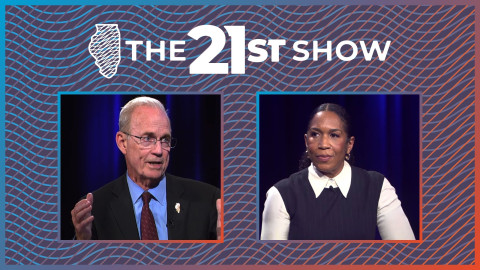
Tuesday night was the only scheduled debate in the campaign to be the next U.S. Senator from Illinois. Republican Don Tracy faced off against Democratic Lieutenant Governor Juliana Stratton. We’ll recap what happened with Illinois public radio reporter Mawa Iqbal.
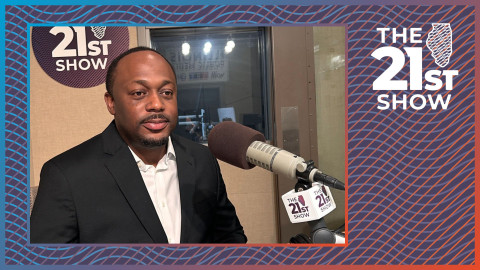
Whitfield Harrington Jr., a pastor from Chicago, is running to be the next U.S. Senator from Illinois. He registered as the candidate of the American Center Party, which he also founded as a state party (not to be confused with any other American Center Party).
Harrington faces steep odds against Democratic nominee Juliana Stratton, who is also the lieutenant governor; and Republican nominee Don Tracy. He's also been excluded from the only televised debate of the campaign, which is happening tonight at WTTW-TV in Chicago (and will be broadcast on select PBS stations across Illinois).
Although Harrington will not be in the debate, he did join us live for a conversation on policy, his view on where exactly the American center actually is, and what it means to campaign outside the two-party system.
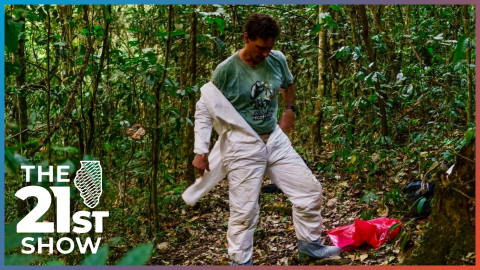
Tony Goldberg has traveled the globe investigating diseases that can move between animals and people. Sometimes that means studying the parasites that attack him along the way, including a tick that hitched a ride from Uganda up his nose.
Goldberg is based at the University of Wisconsin-Madison but was educated in part at the University of Illinois, where he's giving a free public lecture at 4 p.m. Tuesday, Oct. 27. He talked with The 21st Show about his work, how cuts in federal funding have affected disease research, and why human behavior — more than science — may be the weakest link in preventing disease.
With just weeks until the Nov. 3 midterm elections, many people are worried about what could happen — from federal agents at polling places to the president trying to "cancel" the vote. Amanda Carpenter of Protect Democracy, a nonprofit working against authoritarianism in America, says some of those fears are unfounded, while others are worth preparing for.
Carpenter says President Donald Trump cannot cancel the midterms, because elections are run by states and counties, and the national emergency powers he's floated have nothing to do with election administration. She says the Justice Department has lost all 25 of its court cases seeking states' voter data, by her count, and that mail-in voting remains one of the most reliable ways to cast a ballot.
Her advice: make a plan, have a backup and vote early. The bigger vulnerabilities, she says, come in the roughly two months between Election Day and the seating of the new Congress, when results are counted and certified. "Panic is the enemy," she said.
Carpenter also discusses what she calls the unprecedented corruption of the Trump administration — from the Trump family's cryptocurrency profits to the White House ballroom — and why she says control of Congress matters for accountability.
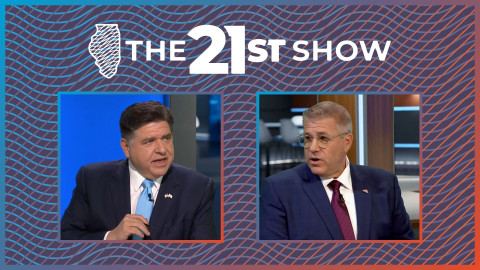
This week in Chicago the two major-party candidates for Illinois governor faced off in their only debate: Democratic incumbent Gov. J.B. Pritzker, and his second-time Republican challenger Darren Bailey. We’ll talk about what happened with Illinois Public Radio’s Mawa Iqbal.
NPR’s Daniel Burke and Scott Detrow spent a year researching the backstory of how an altar boy from Illinois became the leader of the global Catholic Church.
To do that, they talked with more than a hundred people on six continents about Robert Prevost — from his childhood in Dolton, to seminary in Michigan and Chicago, through his time in Peru and Rome.
Lt. Gov. Juliana Stratton is the Democratic nominee for U.S. senator from Illinois, seeking to succeed Sen. Dick Durbin when his term ends in January 2027.
In an interview recorded Friday, we talked about the war in Iran, what she means when she says we ought to “abolish ICE,” and what Democrats should prioritize if they regain control of the U.S. Senate.
Do you believe in the possibility of life elsewhere in our universe? If such life was capable of crossing vast distances of time and space, and were to arrive on Earth, what would that mean for humankind? Or maybe you believe aliens are already among us.
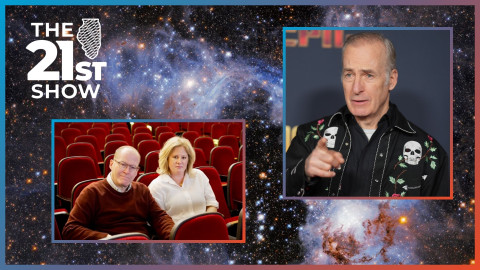
All that is the subject of We Interrupt This Program, a play running this weekend at the Virginia Theatre in Champaign, Illinois. The event will also be broadcast on our home station, WILL, on Halloween night.
The evening will be in two parts: “Show” and “Tell.”
“Show” will be the play itself — with actors including Bob Odenkirk of Breaking Bad and Better Call Saul; and Jill Talley, best known for voicing Karen Plankton on SpongeBob SquarePants.
The second half will be the “Tell” — a discussion including Harvard astrophysicist Avi Loeb, who has polarized colleagues with arguments that aliens may already be among us; and Ahmed Best, an afro-futurist who also played Jar-Jar Binks in the Star Wars movies and Jedi Master Kelleran Beq in The Mandalorian.
Last week, we spoke with two of the people involved in the production: Bill Odenkirk is the play’s writer and executive producer. His past work includes The Simpsons, Futurama, and Mr. Show. And Sarah Edwards is moderatingthe “Tell” portion of the show and is also a producer. You can also see her hosting, producing and directing Prairie Fire on WILL-TV.