From “da Bears” in Chicago to “Hahvahd Yahd” in Boston, our accents shape how the world hears us — and how it judges us. Linguist Valerie Fridland explores how and why in her new book, "Why We Talk Funny: The Real Story Behind Our Accents," which traces how American speech patterns took shape over centuries and why they're still shifting today.
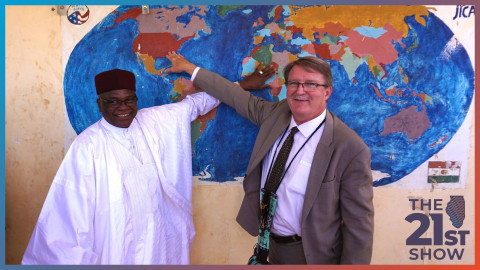
A year after his first visit to The 21st Show, retired U.S. diplomat Eric Whitaker returned to talk about the world as it is now.
The former ambassador to Niger grew up in DeKalb and North Aurora and studied at the University of Illinois. He says the U.S. has "unilaterally diplomatically disarmed," pulling back from alliances while China and Russia move into the space it left behind.
Whitaker talked about the war with Iran and what Tuesday's midterm elections could mean for Congress' role in foreign policy. He also discussed the Sahel, where Niger, Mali and Burkina Faso are run by military juntas and Russian forces reportedly helped put down an attempted coup in Niger this summer. And he defended U.S. food aid and the work of USAID, which the Trump administration has dismantled.
Plus, what he's hearing from friends still in the Foreign Service, where he says morale is down after a wave of departures, and his advice for Illinois students who hope to join it.
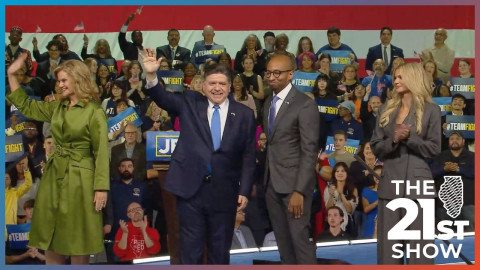
Democrats won decisively across the country Tuesday, and Illinois was no exception. Gov. J.B. Pritzker won a third term, defeating Republican Darren Bailey for the second time. Lt. Gov. Juliana Stratton won the race to succeed U.S. Sen. Dick Durbin.
Chicago Tribune political writer Dan Petrella joins The 21st Show to sort through the results. Topics include where Stratton fits in a changing Democratic Party, Pritzker's national ambitions and the money he's spent helping candidates around the country, what's next for Illinois Republicans, Democratic gains in the General Assembly (and DuPage County), and another round of wins for the movement to split Illinois in two.
Plus, listeners from across the 21st state shared their reactions, along with what they want Democrats to do with their new power in Washington.
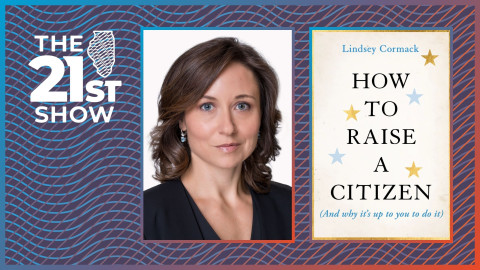
Civic education is an essential part of democracy. But political scientist Lindsey Cormack argues American schools are not up to the task — which means parents have to take matters into their own hands.
On this Election Day, we're listening back to our conversation with Cormack about her book, How to Raise a Citizen. We also talk about DCinbox, her database of the official email newsletters members of Congress send to constituents, and her work with the nonpartisan group Everything Policy.
Abraham Lincoln is often said to be the subject of more books than anyone except Jesus. So what's left to say about the 16th president?
Plenty, according to Jonathan W. White, a professor at the University of Texas at Austin who calls himself an “accidental” Lincoln scholar. White edited Why Lincoln: Preserving an American Legacy, a new collection in which Lincoln scholars explain why they keep coming back to him. White and Ben Dickstein, showrunner and executive producer of the History Channel podcast History This Week, joined The 21st Show to talk about Lincoln's use of presidential power — including his suspension of habeas corpus during the Civil War — and what it can tell us about the presidency now.
White and History This Week host Sally Helm will continue the conversation at a live taping of the History This Week podcast at the Abraham Lincoln Presidential Library and Museum on Friday, Nov. 6. Doors open at 6 p.m., and the taping begins at 6:30. It's free, but reservations are required.